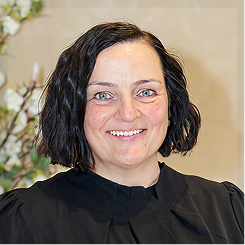

Jess White
IT Team Leader | Project Manager, Property Brokers
I got quoted today for the first time. What I said was this: I want to work on small innovations with a 100% success rate. Read it cold, and it sounds like the opposite of thinking big. It isn't. It's how I got my big thinking back.
I stopped having ideas and didn't notice
I've always been an outside-the-box person. I reckon it was conditioned into me as a kid. Mum hates that description. But it's a gift she gave me, and I want her to be proud of it.
Last year my manager asked me something that landed like a punch. "You always used to think big", he said. "What happened?"
I was floored. I'd lost it, and I hadn't even noticed. Somewhere along the way I'd gone narrow. Overwhelmed. I'd forgotten there was anything outside the box at all. It threw me. I went looking for the moment it happened, and there wasn't one.
Here’s the honest version. I wasn’t turning ideas down. I’d stopped having them. I was doing my job and only my job. Turn up, work the queue, answer the questions, go home.
No improvements. No suggestions. Nothing in a meeting that started with "what if". My brain had just gone quiet.
Yes used to be expensive
Yes is an incredible word. Short, sweet, powerful. It's also one of the hardest words to say and really mean. I worked out what had happened. Yes had got so expensive that my brain stopped putting things in front of me to say it to.
Every good idea came with the same bill attached, and I was the one paying it. Days of my own hours, on top of a job that didn't get any smaller while I was doing it. When that's the price of the first step, you stop taking first steps. You don't decide to stop dreaming. You just quietly start filtering ideas by what you can afford to try, and eventually the filter gets so tight that nothing gets through.
That's not narrow-mindedness. That's maths.
What AI actually changed
Here's the bit that got me excited again, and it's not the thing people usually talk about. AI didn't give me better ideas. My ideas were fine. What it did was make the first step nearly free.
I started with the boring end. Feedback on things I'd already built. They worked. They weren't broken. They were just clunky. Not intuitive. Sitting in an old system that took days and a big chunk of my own hours to build in the first place, and once they were done, I never wanted to touch them again.
That's the bit I'd stopped noticing. The old way didn't just cost days up front. It left me with something I was scared to improve. So it never got better.
Then I had a thought I hadn't had in a long time. There's a better way now. New infrastructure, smarter tools. So let's make it better.
Two hours. That's all it took to improve the first one. It was just an approval form for expenses. The old way, that same job would have eaten days, if not weeks, while trying to fit everything else in.
That’s the shift. The gap between "we could" and "here, have a look" used to be days. Now it can be an afternoon. And when the first step is cheap, you can afford to be wrong. Being allowed to be wrong is what big thinking runs on.
.png)
So why small, and why 100%
Because I'd lost the habit, and habits come back one rep at a time. A small win you're certain of does two things. It gets you saying yes again, which sounds soft but is the whole game. And it buys you credibility with everyone watching, which is what you'll need when you eventually walk in with the big one.
Ten small innovations that all landed don't add up to small ambition. They add up to a team that believes the next idea might work, and a leader who's allowed to try it. Do that enough times, and the big thing stops looking impossible. It just looks like the next one.
I'm not chasing the big one yet. I'm rebuilding the muscle.
Your turn
Don’t go and "start using AI". That’s not a task; it’s a wish.
Pick the one annoying job you've complained about twice this month. The manual thing. The copy and paste thing. Give it twenty minutes tomorrow. You're not trying to change the company. You're trying to say yes to something small and be right about it.
That's where it starts.